Best overall
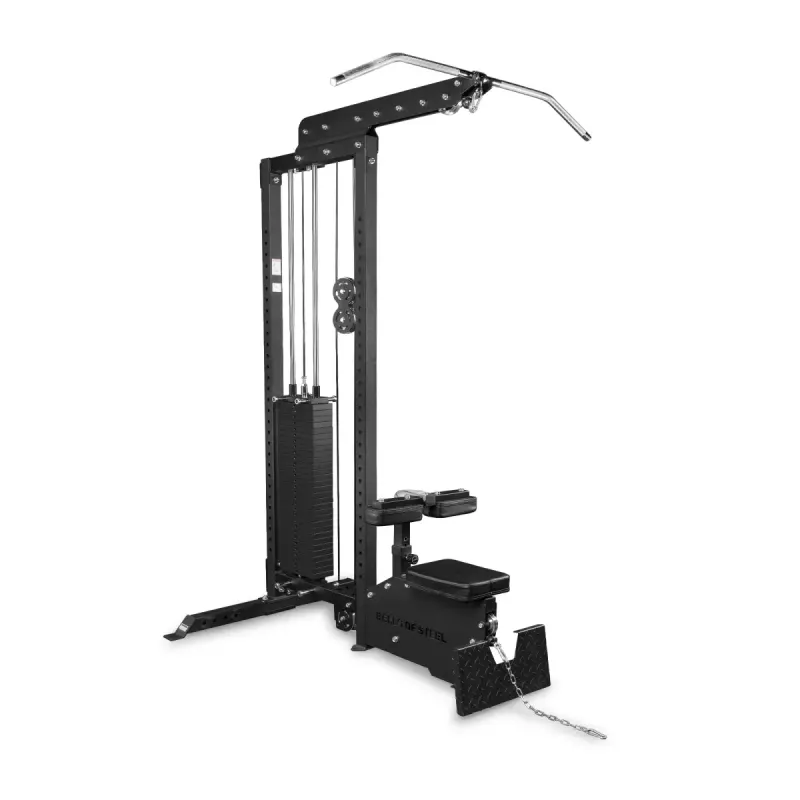
Bells of Steel Lat Pulldown / Low Row Machine
310 lb stack at 1:1, lifetime warranty.
About $870 plate-loaded, $2,060 with stack
Check priceThe best lat pulldown machines for home in 2026: Bells of Steel and Titan towers, plus REP rack attachments from $265, compared on stack and size.
The best standalone lat pulldown machine is the Bells of Steel Lat Pulldown / Low Row: a 310 lb stack at 1:1, thigh pads and a limited lifetime warranty. If you own a REP rack, add the REP selectorized lat and low row instead.
A lat pulldown is the machine that makes back training at home feel like the gym: heavy, adjustable pulldowns and seated rows without needing to do pull-ups. As of October 2026, we’ve compared the lat machines on the top-ranking lists with what lifters say on r/homegym, r/GarageGym and r/ScienceBasedLifting, and checked every stack, ratio, size and warranty on the brand’s own site. Five are worth buying.
Best overall
Bells of Steel Lat Pulldown / Low Row Machine
310 lb stack at 1:1, lifetime warranty.
About $870 plate-loaded, $2,060 with stack
Check price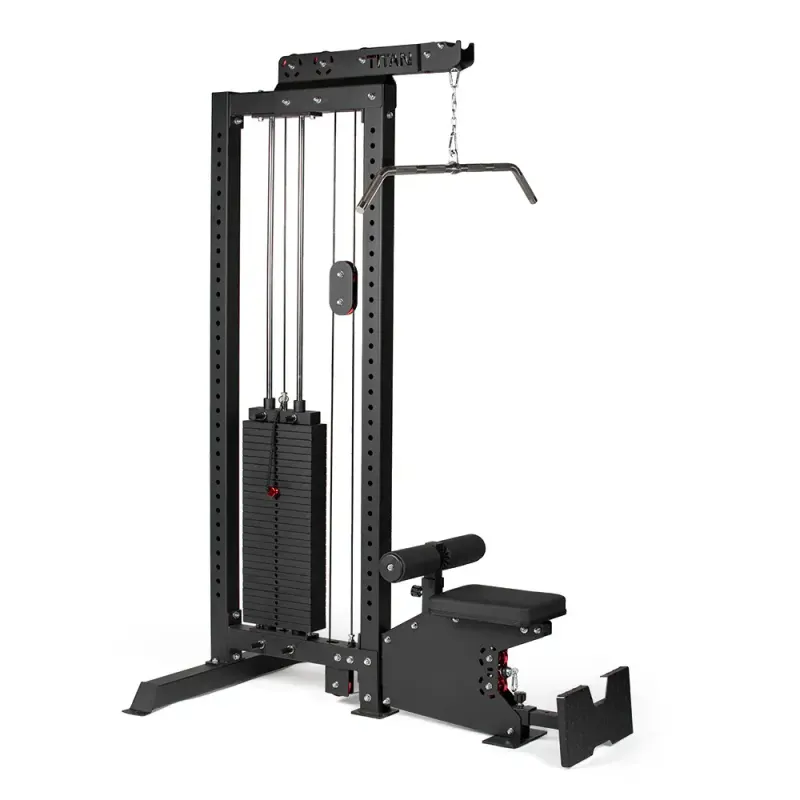
Best value stack
Titan Lat Tower (300 lb Stack)
300 lb stack for about $1,570.
About $1,570
Check price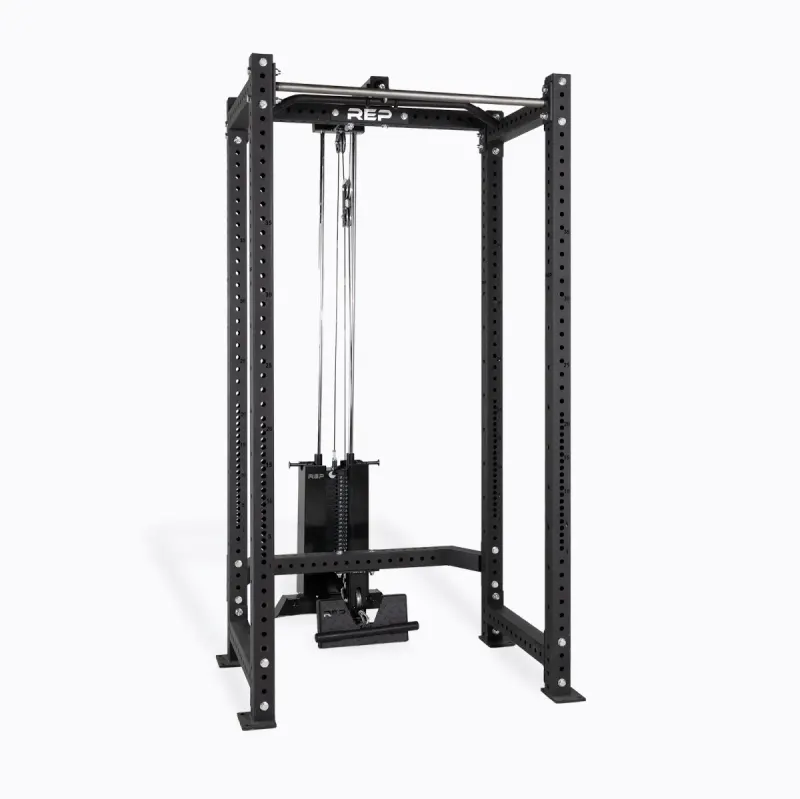
Best rack-mounted
REP Selectorized Lat Pulldown & Low Row (4000/5000)
200 lb stack on a REP rack.
About $1,350
Check price
Best budget
REP Plate-Loaded Lat Pulldown & Low Row (1000 Series)
Plate-loaded rack attachment, about $265.
About $265
Check price| Pick | Product | Type | Size | Warranty | Price |
|---|---|---|---|---|---|
| Best overall | Bells of Steel Lat Pulldown / Low Row Machine Check price | Standalone lat pulldown and low row | 41″W × 70″D × 87″H | Limited lifetime | About $870 plate-loaded, $2,060 with stack |
| Value | Titan Lat Tower (300 lb Stack) Check price | Selectorized lat tower | 41″W × 57″D × 87″H | 1 year | About $1,570 |
| Rack-mounted | REP Selectorized Lat Pulldown & Low Row (4000/5000) Check price | Rack-mounted lat pulldown | Rear of a REP PR-4000/5000 | Lifetime frame and welds | About $1,350 |
| Budget | REP Plate-Loaded Lat Pulldown & Low Row (1000 Series) Check price | Plate-loaded rack attachment | Rear of a REP PR-1000/1100 | Lifetime frame and welds | About $265 |
| Rack cables | REP Athena Selectorized Side-Mount Functional Trainer Check price | Rack-mounted single cable column | Adds about 4–6″ to a REP rack | Lifetime frame and welds | About $950 each |
Prices checked October 2026 on each brand's site and change often. Tap a product to jump to its review.
Best for a gym-style lat pulldown at home
A standalone lat pulldown and low row with a 310 lb stack (or plate-loaded), adjustable thigh pads and a 1:1 ratio.
The Bells of Steel machine is a gym-style lat pulldown and low row in one. The 310 lb stack runs at 1:1, so it’s heavy enough for strong lifters, adjustable thigh pads lock you in for heavy pulldowns, and high and low pulleys add rows, pushdowns and curls. A plate-loaded version costs about $870, and you can upgrade it to the stack later.
It takes about 41″ × 70″ of floor, and Bells of Steel recommends bolting it down. Its own reviews average 4.8 out of 5 from 85.
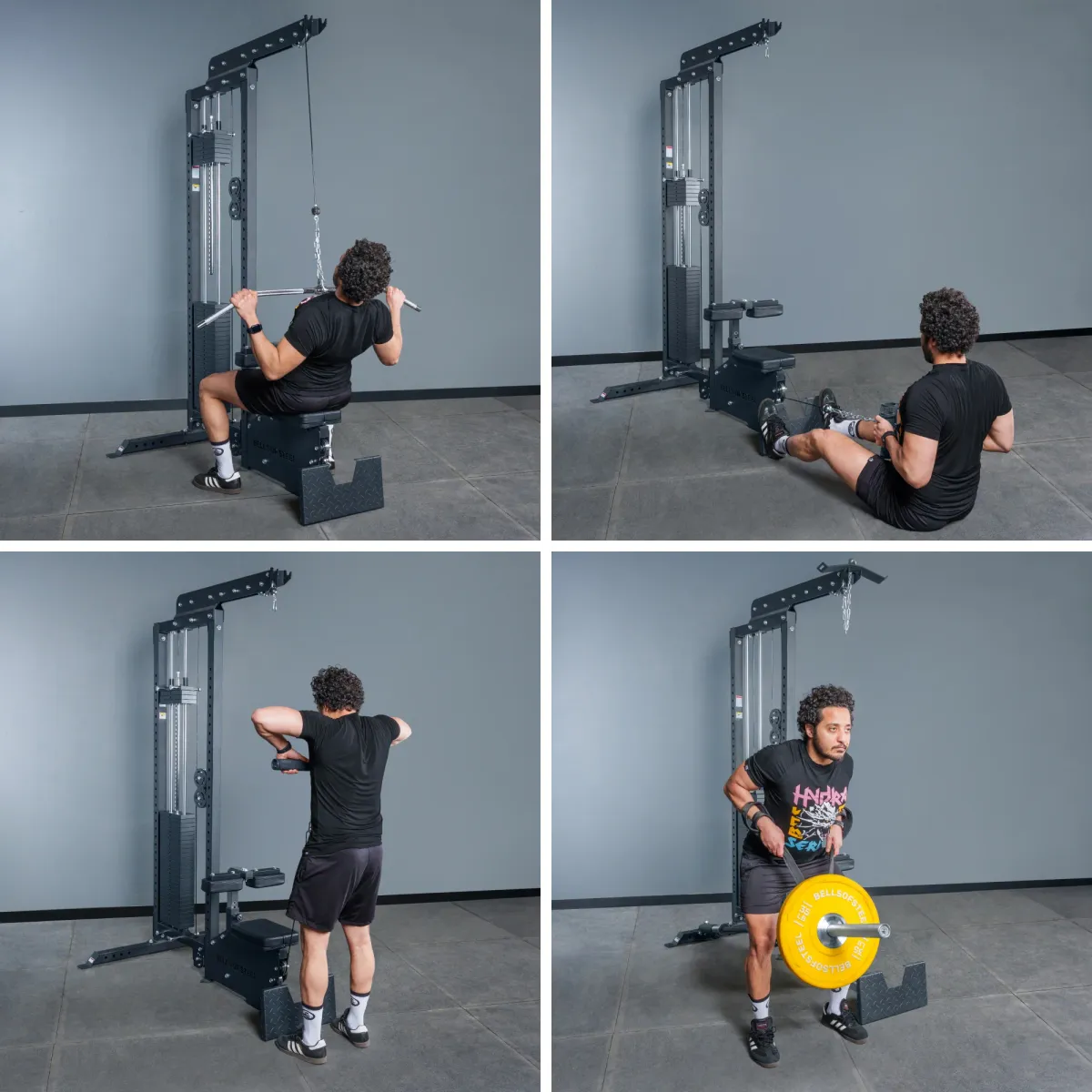
Bells of Steel’s own reviews average 4.8 out of 5 from 85. On r/ScienceBasedLifting, lifters say cable pulldowns are as effective as plate-loaded machines and more adjustable for different body sizes and grips.
Skip it if: You have a power rack. A rack-mounted lat attachment costs far less.
Best for a heavy selectorized lat tower for less
A standalone lat pulldown and low row with a 300 lb stack at 1:1, for about $500 less than a comparable Bells of Steel.
Titan’s lat tower has a 300 lb stack at 1:1 with a magnetic pin, a knurled multi-grip lat bar, a thigh pad and a footplate for rows, for about $1,570, roughly $500 less than the Bells of Steel stack version. It’s shallower too, at 57″ deep.
The warranty is one year, against Bells of Steel’s limited lifetime.
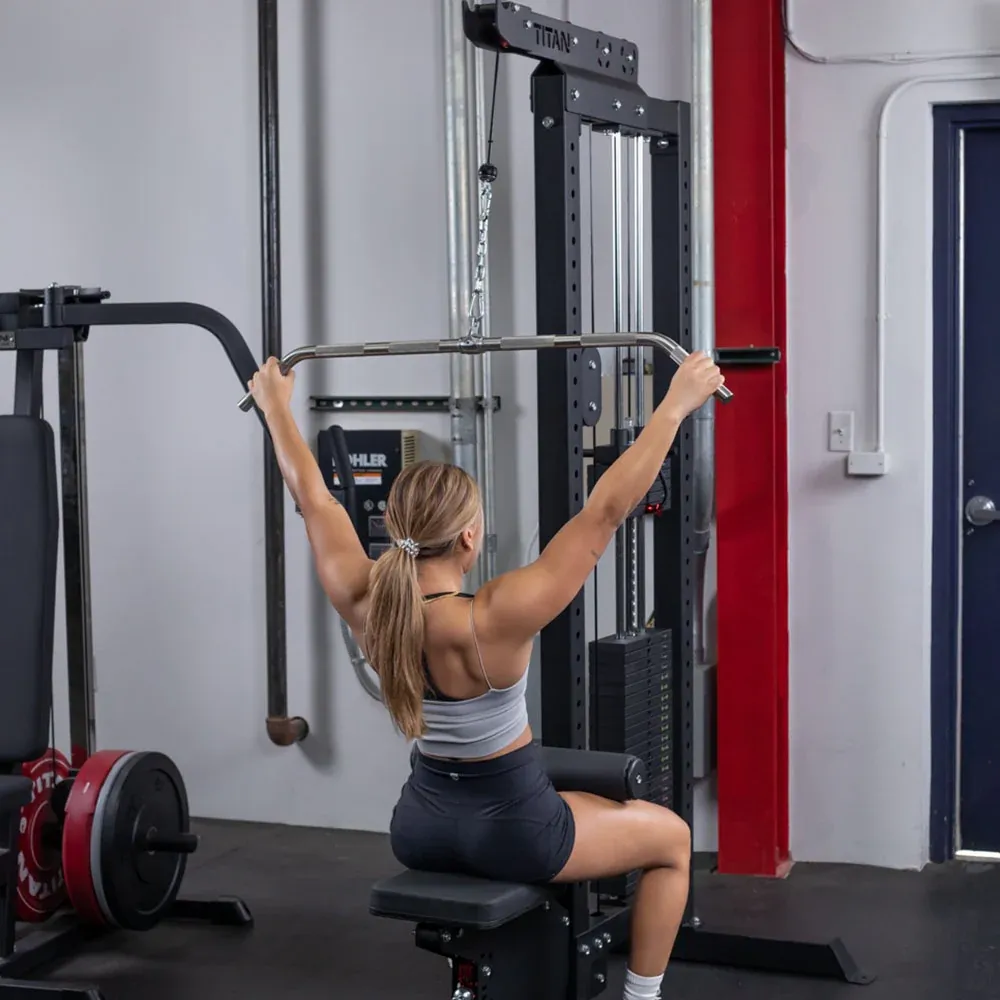


We found little owner discussion of this model on Reddit.
Skip it if: You want a longer warranty. The Bells of Steel has a limited lifetime warranty.
Best for a lat pulldown on the back of your rack
A 200 lb selectorized lat pulldown and low row that mounts to the back of a REP rack, so it uses no extra floor space.
If you have a REP PR-4000 or PR-5000, this 200 lb, 1:1 selectorized lat and low row mounts to the back of the rack and uses no extra floor. REP owners rate it 4.9 out of 5 from 138 and describe the pulleys as butter-smooth. It costs about $1,350, and assembly takes two to four hours.
Some owners find the low row position awkward.
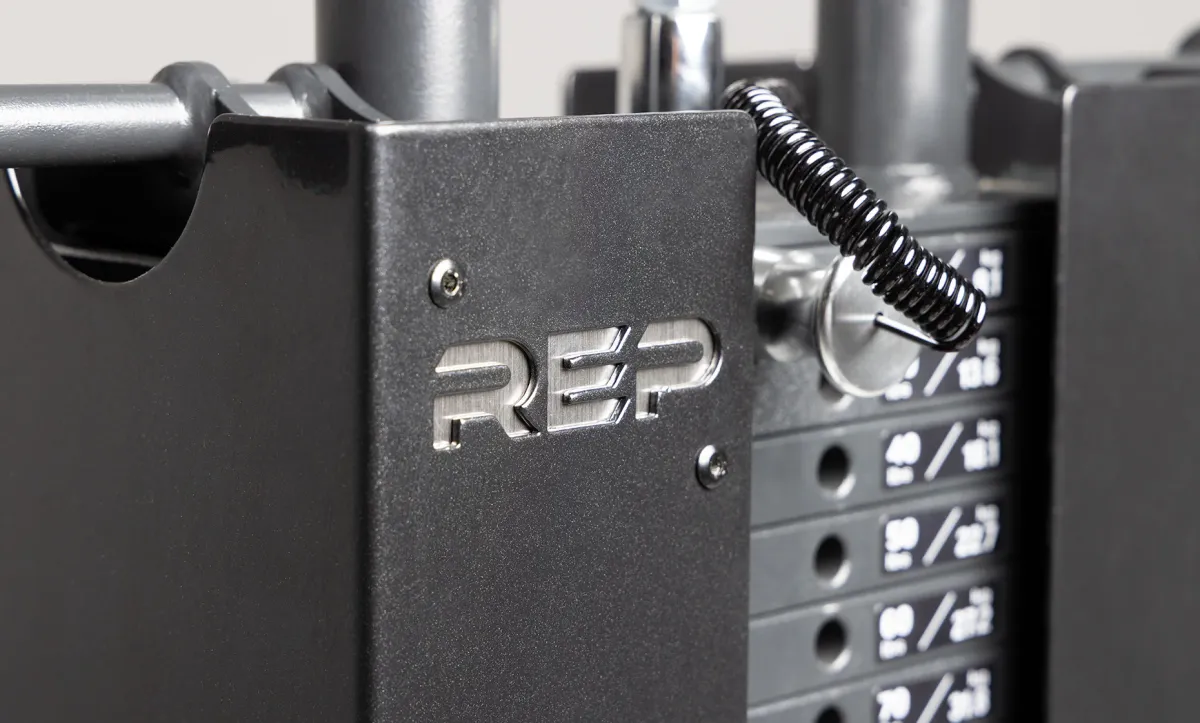
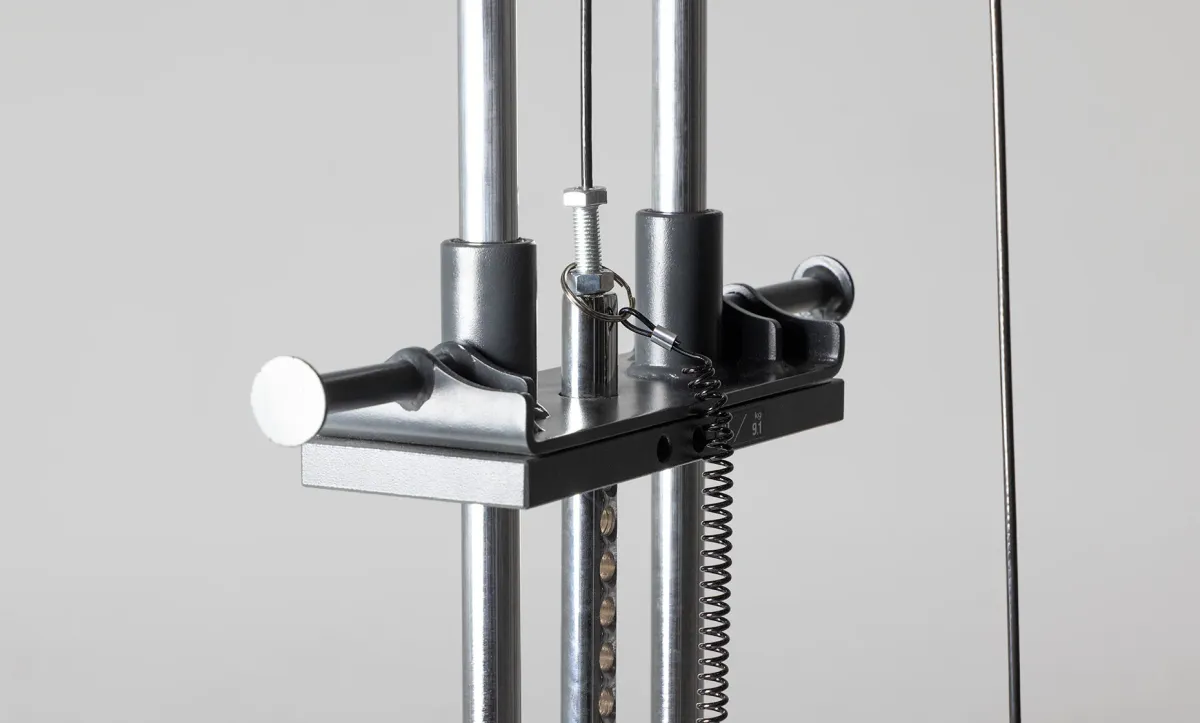
REP’s review summary says owners describe it as turning their rack into commercial-quality equipment, with “butter”-smooth aluminium pulleys and much faster changes than plates. Assembly takes two to four hours, and some find the low row position less comfortable.
Skip it if: You don’t have a REP rack.
Best for the cheapest lat pulldown for a budget rack
A $265 plate-loaded pulley system for REP’s budget racks that adds lat pulldowns, rows, pushdowns and curls.
For about $265, REP’s plate-loaded attachment adds a 1:1 lat pulldown and low row to the PR-1000 or PR-1100 rack. Owners say it installs in 30–60 minutes and is great value compared with standalone machines; some lubricate the pulleys for a smoother pull.
REP’s review summary says owners find it easy to install (30–60 minutes), smooth and great value compared with standalone machines, though some say the pulleys benefit from lubrication.
Skip it if: Your rack isn’t a REP PR-1000/1100.
Best for adding cables to a rack you already own
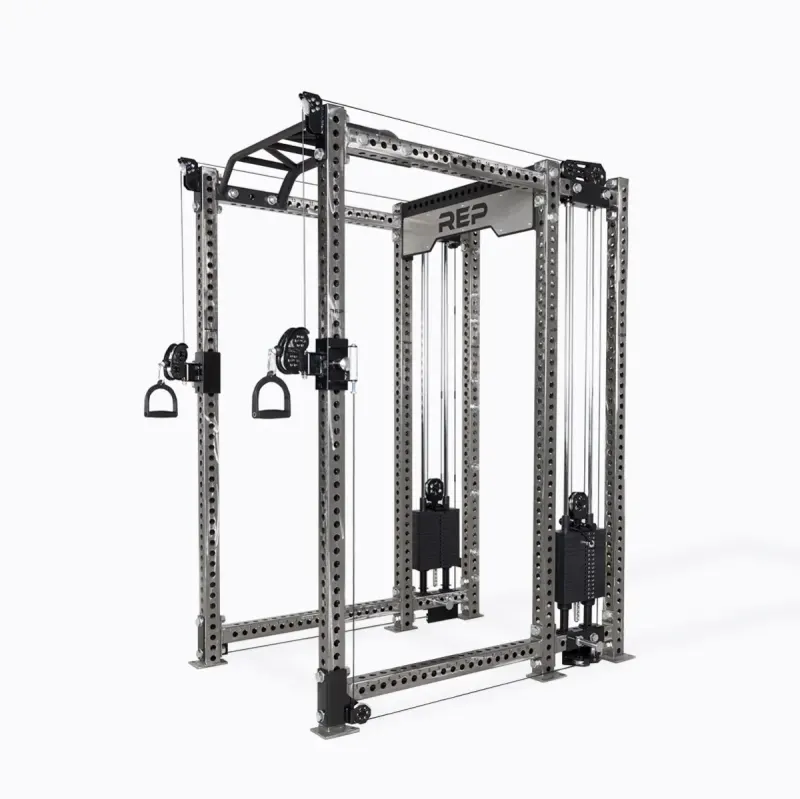
A selectorized cable column that bolts to the side of a REP rack. One gives you a single cable station; two make a functional trainer.
If you want a lat pulldown and a full cable station, the Athena side-mount bolts to a REP rack and handles pulldowns, rows and every cable accessory. Its 2:1 ratio halves the felt weight, so owners recommend the stack upgrade for heavy pulldowns.
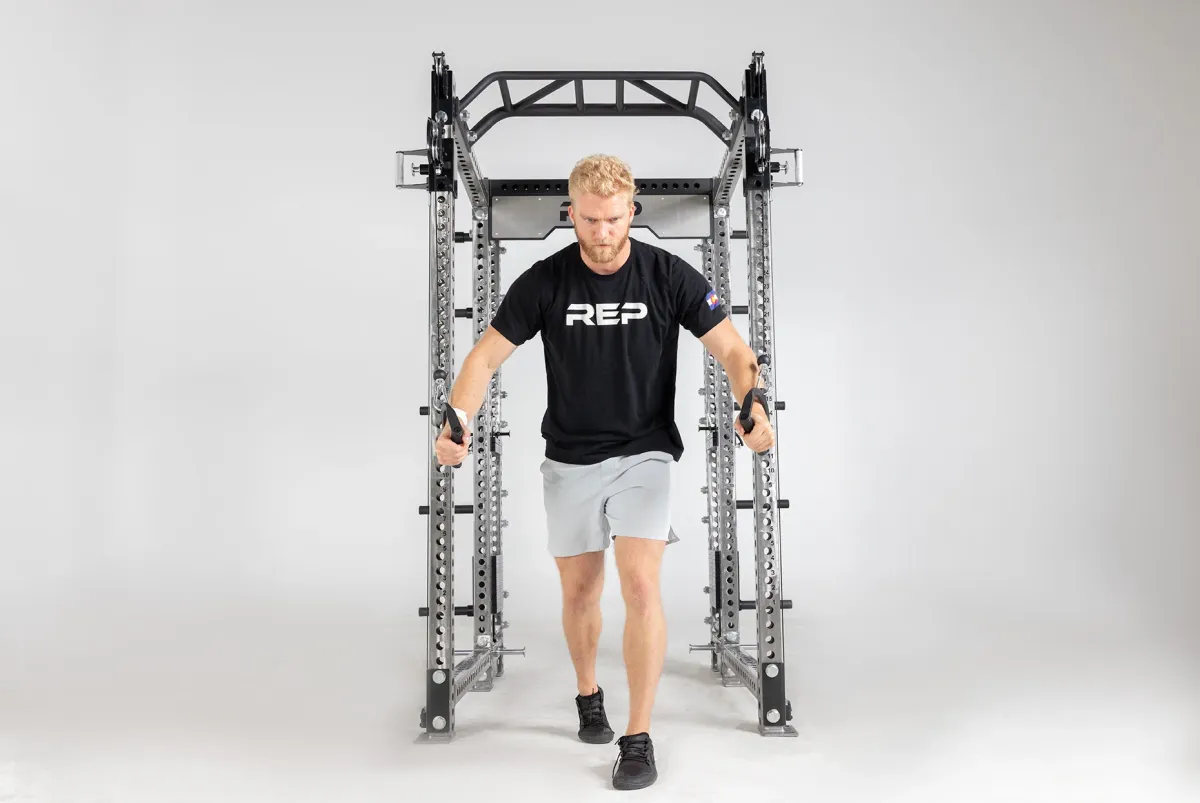
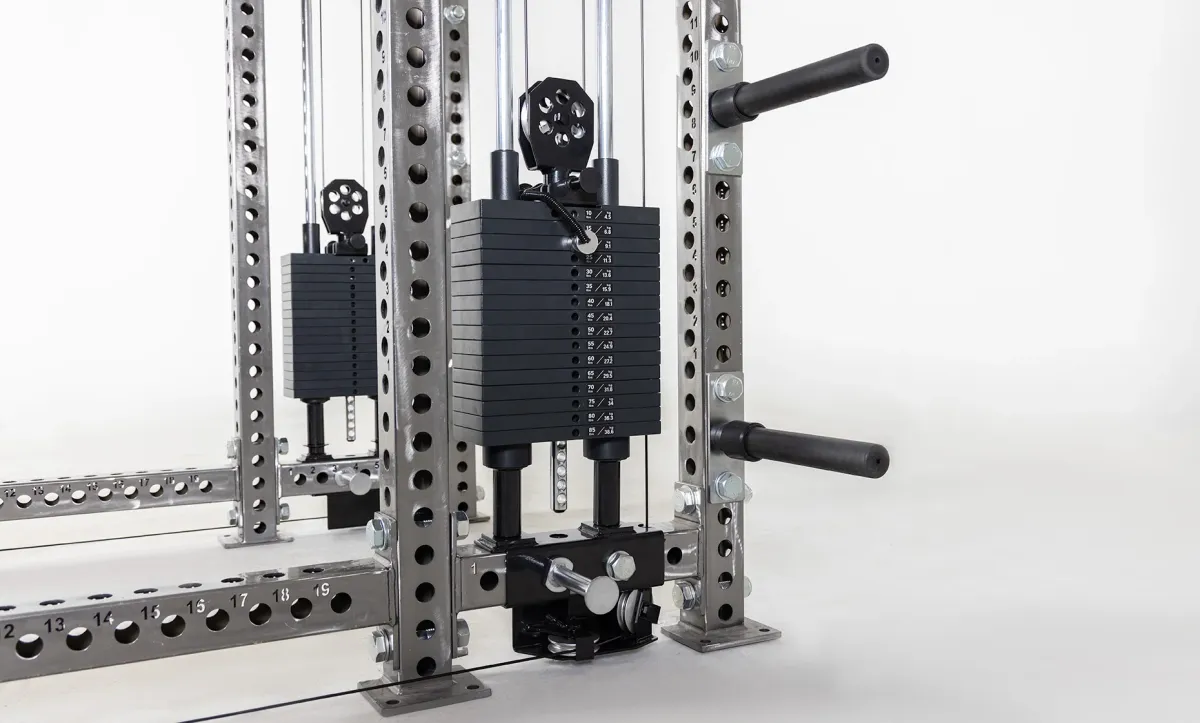
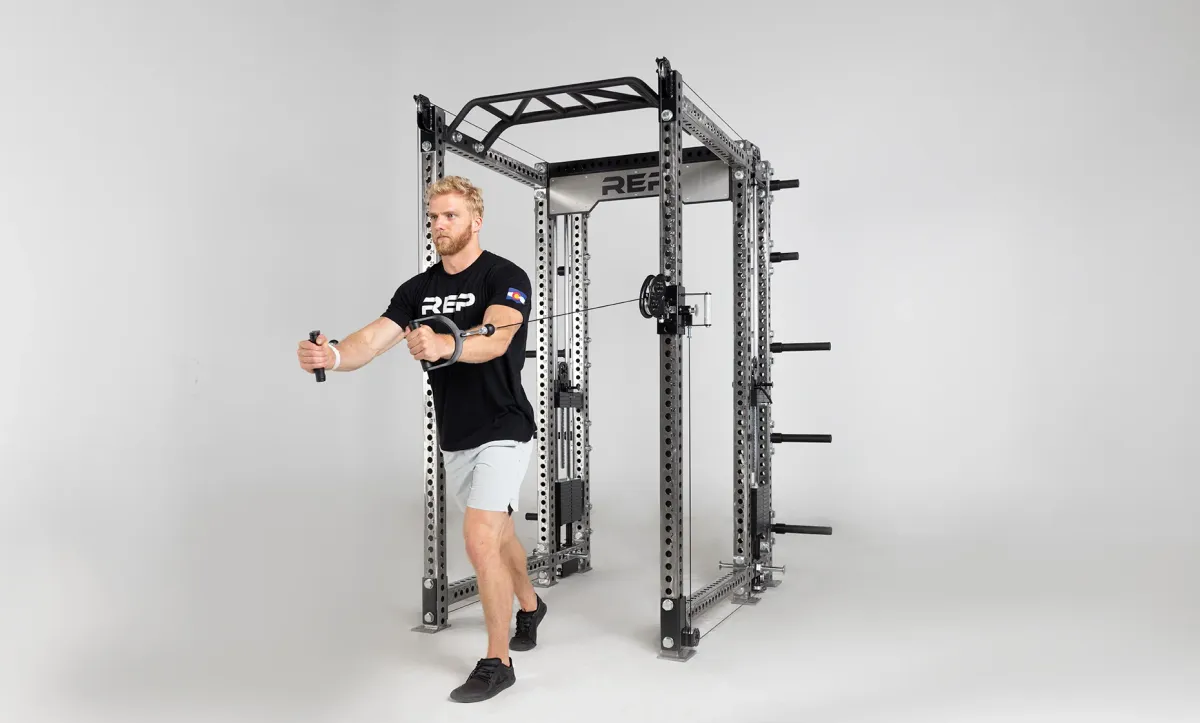
REP’s review summary says owners like how it turns a rack into a functional trainer without the floor space, with smooth, commercial-feeling pulleys, and many recommend the stack upgrade for heavy pulldowns and rows. On r/homegym, one owner of a Rogue rack said seeing an Athena crossover setup convinced them to switch to REP.
Skip it if: You don’t have a REP rack.
Rack attachments are cheaper and save space, but only fit specific racks. Owners on r/GarageGym warn to check your rack’s tube size (2″ × 2″ or 3″ × 3″ have the most attachments; 2″ × 3″ the fewest).
Look for 1:1 and at least 200 lb of stack. 2:1 machines run out of weight quickly on pulldowns.
Without them, heavy pulldowns lift you off the seat. Standalone towers have them; some functional trainers don’t.
On r/homegym, some owners argue that a pull-up bar and bands cover most of the same work for less space; others value face pulls, rows and precise loading. Lifters on r/ScienceBasedLifting agree that cable and machine pulldowns work equally well.
We started with the lat machines on the top-ranking lists for “best lat pulldown machine”, then read owner and lifter threads on r/homegym, r/GarageGym and r/ScienceBasedLifting. We checked stack weight, ratio, size, price and warranty on each brand’s own site in October 2026. We haven’t tested every machine hands-on. How we research.
For a cable machine that does more than pulldowns, see our best cable machines.
The Bells of Steel Lat Pulldown / Low Row Machine is the best standalone lat pulldown for home. It has a 310 lb weight stack at a 1:1 ratio, adjustable thigh pads and a limited lifetime warranty, for about $2,060 (or about $870 plate-loaded). If you own a REP rack, a rack-mounted lat attachment is cheaper and takes no extra floor space.
Not necessarily. A pull-up bar plus bands does a lot of the same work, and some owners on r/homegym say a dedicated lat machine isn't the most efficient use of space. A lat pulldown is worth it if you can't do pull-ups yet, want to load your back heavier and more precisely, or want low rows too.
Yes. On r/ScienceBasedLifting, lifters say there's no meaningful difference in results. Cable pulldowns are often more adjustable for different body sizes and accept different handles, while plate-loaded machines have a fixed path.
A 1:1 ratio is best for lat pulldowns and rows: 100 lb on the stack feels like 100 lb. Functional trainers usually use 2:1, which halves the felt weight, so strong lifters can run out of stack on pulldowns.
Often, yes. Bells of Steel strongly recommends bolting its lat machine to the floor, and Titan recommends bolting its plate-loaded tower before heavy rows. Check the manual and plan for anchors if you'll pull heavy.