Power Rack vs Squat Rack: Which for a Home Gym?
Power rack vs squat rack for a home gym: safety, space, attachments, price and which to buy, with REP's PR-4000 and SR-4000 as examples.
The short answer
Buy a power rack if you lift alone and have the space: four uprights and full-length safeties let you fail a squat or bench safely, and it takes the most attachments. Buy a squat rack (squat stand or half rack) if space is tight or you mostly lift with a spotter.
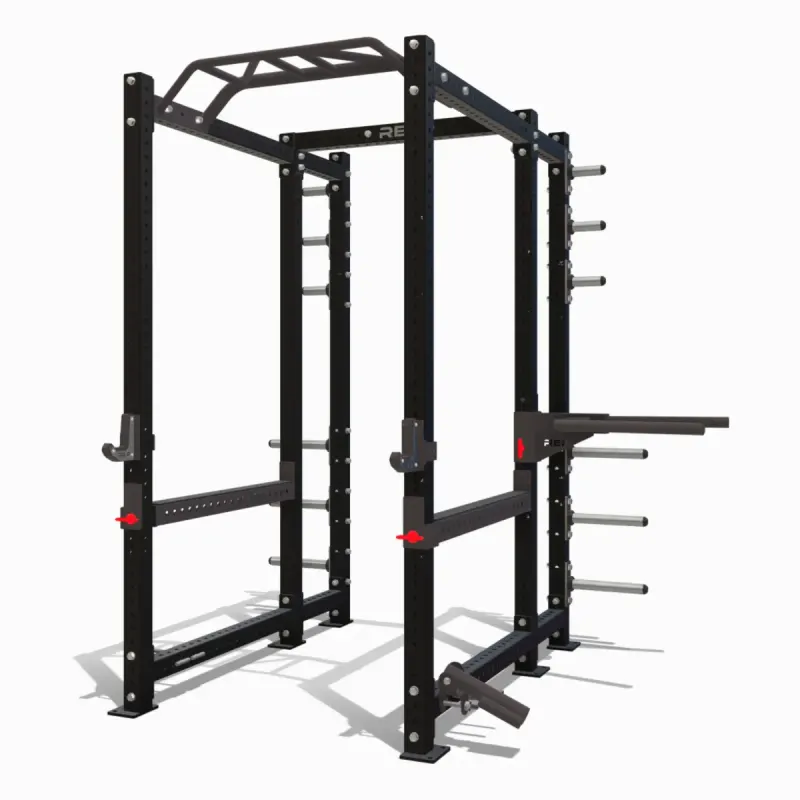

Power rack vs Squat rack at a glance
| Safety lifting alone | Power rack You lift inside a four-post cage with safeties on both sides. |
|---|---|
| Space | Squat rack Two uprights take far less floor and look lighter in a room. |
| Attachments | Power rack More places to mount cables, lat pulldowns, dip bars and storage. |
| Price | Squat rack Usually a few hundred dollars less for the same brand and steel. |
| Stability | Power rack Four connected uprights are steadier, especially for pull-ups. |
Specs side by side
| REP PR-4000 Power Rack | REP SR-4000 Squat Rack | |
|---|---|---|
| Type | 4-post power rack, 3×3″ steel | Squat stand / half rack, 3×3″ |
| Size | 50.8″ wide, 16–41″ deep | 52.4″W × 71.4″D |
| Warranty | Lifetime on the rack frame | Lifetime on the rack frame |
| Price | From about $800 | From about $750 |
| Best for | A rack you buy once and build on for years | Lifting outside a cage, with room to move |
Specs from manufacturer pages; prices checked October 2026.
What’s the difference?
A power rack (or power cage) has four uprights joined at the top, and you lift inside it with safety bars on both sides. A squat rack usually means a squat stand or half rack: two main uprights with J-cups and spotter arms that stick out in front. On r/Fitness, lifters point out the names get used interchangeably, so check the picture.
Safety
If you lift alone, a power rack is the safer choice: the REP PR-4000 uses strap or pin safeties that run the full depth of the cage, so a failed squat or bench lands on them wherever you are. Squat racks rely on spotter arms out front, which work if they’re long enough and set correctly.
Space and price
A squat rack like the REP SR-4000 takes less floor, looks lighter in a spare room or garage, and costs less. If your ceiling is low or you need to park a car, a squat rack or folding rack may be the only option that fits.
Attachments
Power racks have more uprights to mount things on: lat pulldowns, cable columns, dip bars, plate storage. If you plan to build out a full gym around the rack, the cage gives you more room to grow. See our best functional trainers for rack-mounted cable options.
Which should you buy?
A power rack for most home lifters who train alone and have about 4 × 4 ft plus bar clearance. A squat rack when space or budget rules out a cage. See all our picks in best squat racks.
FAQ
What is the difference between a power rack and a squat rack?
A power rack is a cage with four uprights joined at the top, so you lift inside it between two safety bars. A squat rack (or squat stand, or half rack) has two uprights, or two plus short rear posts, with spotter arms out front. The names are often used loosely.
Is a squat rack safe without a spotter?
It can be, with long spotter arms set at the right height, but a power rack is safer because the safeties run the full depth of the cage and you can't step outside them. If you lift alone and push to failure, a power rack is the safer choice.
Can I bench press in a squat rack?
Yes, with spotter arms set just below your chest at the bottom of the rep. Make sure they're long enough to catch the bar if you fail.